
Air conditioning is no longer a luxury - it’s an expectation. Whether you’re developing a residential block, running a hotel, managing a holiday park, or refurbishing a restaurant, the right AC system can:
- Increase property value and marketability
- Improve guest and tenant comfort, reducing complaints
- Boost energy performance ratings and sustainability credentials
- Support compliance with building regulations and F-Gas obligations
For property developers, it can help apartments sell faster. For hoteliers, it can make the difference between a 3-star and 5-star review. For holiday park operators, it ensures guest comfort during peak season.
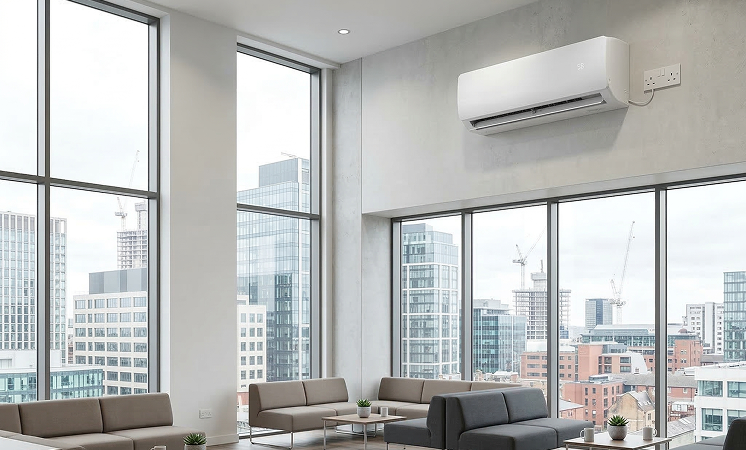
How does an air conditioning system work?
At its core, an AC system transfers heat out of a building using a refrigerant cycle, then returns cool, dehumidified air inside. Many modern systems are also heat pumps, able to reverse the process and provide heating more efficiently than traditional boilers or electric heaters.
In B2B projects, the system architecture is what matters most:
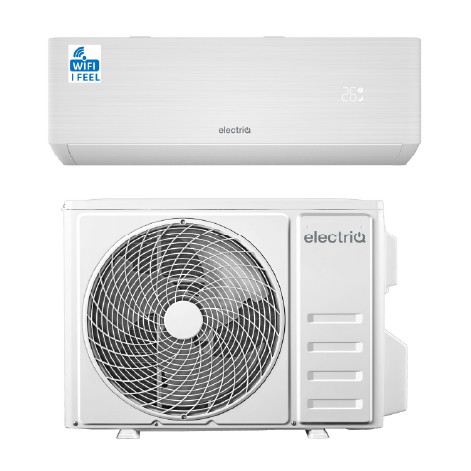
Split system
Property application
Single flats, individual hotel rooms, small lodges
How it’s installed
One indoor unit paired with one outdoor condenser
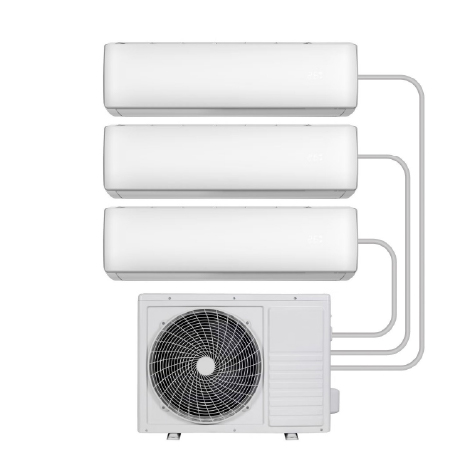
Multi-split
Property application
Apartments, hmos, holiday park lodges
How it’s installed
Several indoor units connected to a single outdoor unit
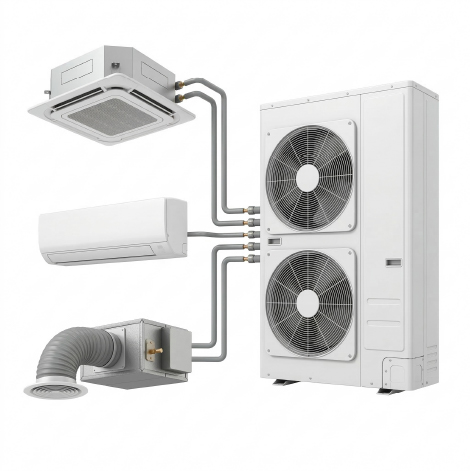
VRF/VRV
Property application
Hotels, resorts, large residential blocks
How it’s installed
Dozens of indoor units connected to one or more outdoor units
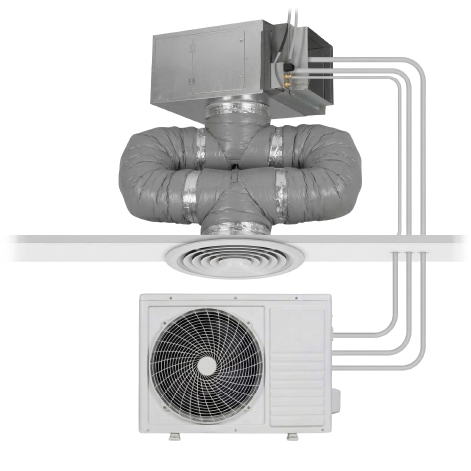
Ducted systems
Property application
Premium apartments, restaurants, hotels
How it’s installed
Central unit connected to hidden ductwork for distributing conditioned air
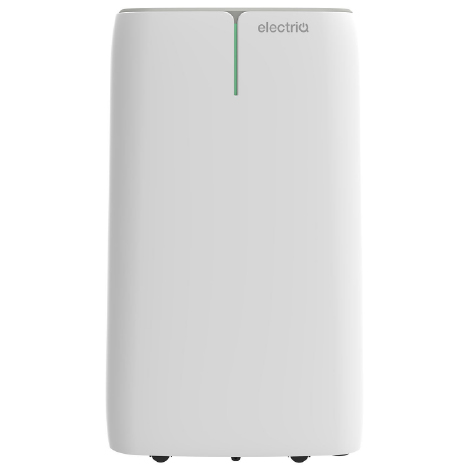
Portable / All-in-one
Property application
Temporary site offices, events, refurb phases
How it’s installed
Self-contained units requiring no permanent installation
Choosing the right size & capacity
Sizing matters. Too small = tenant complaints. Too large = wasted energy and higher costs

1-2 bed flat
Typical requirement
7,000–12,000 BTU
Example solution
Wall-mounted split system

Student hmo (4-6 rooms)
Typical requirement
18,000–24,000 BTU
Example solution
Multi-split system with one outdoor condenser

Small office (100m²)
Typical requirement
24,000–36,000 BTU
Example solution
Multi-split or ducted system

Hotel (50 rooms)
Typical requirement
100,000+ BTU
Example solution
VRF system with zoned controls

Mixed-use building
Typical requirement
Variable
Example solution
Combination of ducted & VRF
Key considerations for property, hospitality & holiday parks
When selecting AC systems for property projects, look beyond basic cooling capacity:
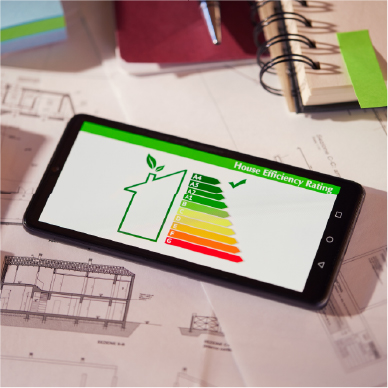
Energy efficiency
Direct impact on EPC scores, guest bills, and sustainability goals.

Noise levels
Guest sleep quality, neighbour relations, and planning permissions depend on this.
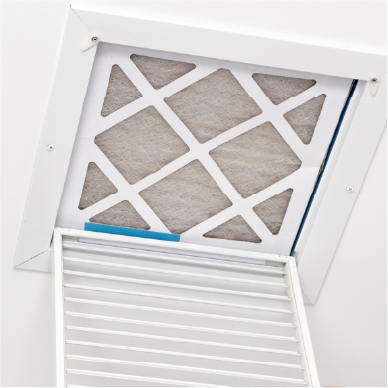
Air quality
Built-in filtration is vital for schools, hotels, and HMOs.
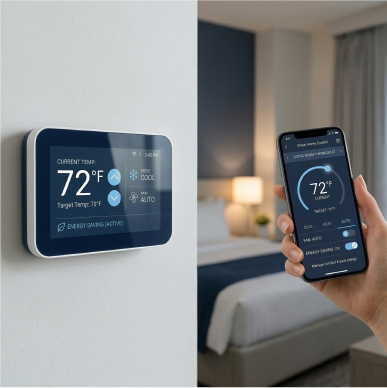
Smart controls & zoning
Saves energy and enables personalised comfort.

Warranty & aftercare
Landlords and hoteliers reduce liability with robust service contracts.

Future-proofing
Low-GWP refrigerants and f-gas compliance protect long-term investment.
Clever features that add value to property projects
Modern AC systems offer more than just cooling. These features can improve comfort, efficiency, and even marketing appeal:

Smart connectivity
Wi-Fi enabled systems let landlords, facility managers, or hoteliers control rooms remotely via apps or voice assistants.
Benefits
- Hotels can pre-condition guest rooms before check-in
- Landlords can cut waste in vacant flats
- Holiday parks can link AC with booking systems

Heating mode (Heat pump technology)
Reversing the cycle, AC can heat as well as cool. Heat pumps are up to 4x more efficient than electric heating and often cheaper than gas.
Benefits
- Developers improve EPC ratings
- Hotels reduce winter heating costs
- Holiday parks avoid installing separate heating systems

Multi-split functionality
Multi-split systems power several indoor units from a single outdoor condenser. This keeps façades uncluttered, simplifies servicing, and provides independent temperature control across different rooms.
Benefits
- Property: fewer external units and easier maintenance for landlords
- Hospitality: hotel rooms and restaurants each get tailored comfort
- Holiday parks: lodges and communal spaces can be zoned for efficiency

Dehumidifier / Dry mode
Dry Mode reduces excess moisture in the air, creating a fresher and healthier environment
Benefits
- Property: prevents mould and damp complaints in rented flats or HMOs
- Hospitality: improves guest comfort in coastal resorts and spas
- Holiday parks: protects timber lodges and lightweight builds from humidity damage
Why buy from BUY IT?
With BUY IT, you’re not just buying air conditioning - you’re getting a partner that makes business buying as simple as shopping for yourself.
We bring everything under one roof: air conditioning, appliances, bathrooms, furniture, outdoor living, and more. That means fewer suppliers, fewer invoices, and fewer headaches.
Unlock more value
- Trade-exclusive pricing & bulk deals: save money when fitting out multiple properties, sites, or guest units
- Flexible finance & credit terms: manage cash flow on big purchases and project rollouts
- Tailored bundles: curated packages by sector, from landlord fit-outs to hotel suites to holiday lodges
Built for Business
- End-to-end service: specification, delivery, installation, and aftercare - handled by real people who know your industry
- Flexible delivery: one-hour slots, next-day options, and scheduling around guest bookings or construction timelines
- Dedicated account support: a named contact who understands your projects and priorities
Industry Expertise
- Property & Construction: scheme-specific recommendations, bulk pricing, and r eliable supply to keep projects on schedule
- Hospitality & Holiday Parks: solutions that improve guest experience, from quiet, efficient AC to outdoor furniture and hot tubs
- Professional Buyers: seamless procurement with everything from IT to FF&E, designed to cut admin and increase margin
At BUY IT, we combine the service of old-school trade relationships with the speed and simplicity of modern e-commerce
That’s why businesses trust us to deliver - whether it’s a single replacement unit or a multi-site fit-out.
Installation & project planning
Unlike consumer installs, commercial projects require integration with construction schedules and compliance frameworks.

Best practice checklist
Integrate AC planning during architectural and M&E stages
Use F-Gas certified contractors only
Factor in structural load and crane access for rooftop installations
Plan for service access, condensate drainage, and pipe runs
Provide “as-built” documentation, service manuals, and handover training for property managers
Maintenance & lifecycle management
Air conditioning requires proactive upkeep, particularly across multiple properties.
Best practice checklist
Integrate AC planning during architectural and M&E stages
Factor in structural load and crane access for rooftop installations
Plan for service access, condensate drainage, and pipe runs
Plan for service access, condensate drainage, and pipe runs
Provide “as-built” documentation, service manuals, and handover training for property managers